
CHOOSING YOUR FIRST HANDGUN
Choosing a first handgun should not begin with a brand name, caliber, or recommendation from a friend.
It should begin with understanding how the firearm will be used, whether you can operate it safely, and whether you are willing to train with it consistently.
The best handgun is not necessarily the smallest, most powerful, or most popular option. It is the one that fits your needs and allows you to handle it safely and confidently.
Start With Your Intended Purpose
Before comparing models, decide what role the handgun will serve.
You may be considering a firearm for:
- Recreational or target shooting
- Home protection
- Licensed concealed carry
- Competition
- Skill development
A firearm designed primarily for range use may not be ideal for everyday carry. Likewise, a small handgun that is easy to conceal may be more difficult for a new shooter to control.
Clearly defining the purpose helps narrow the options.
Fit Matters More Than Appearance
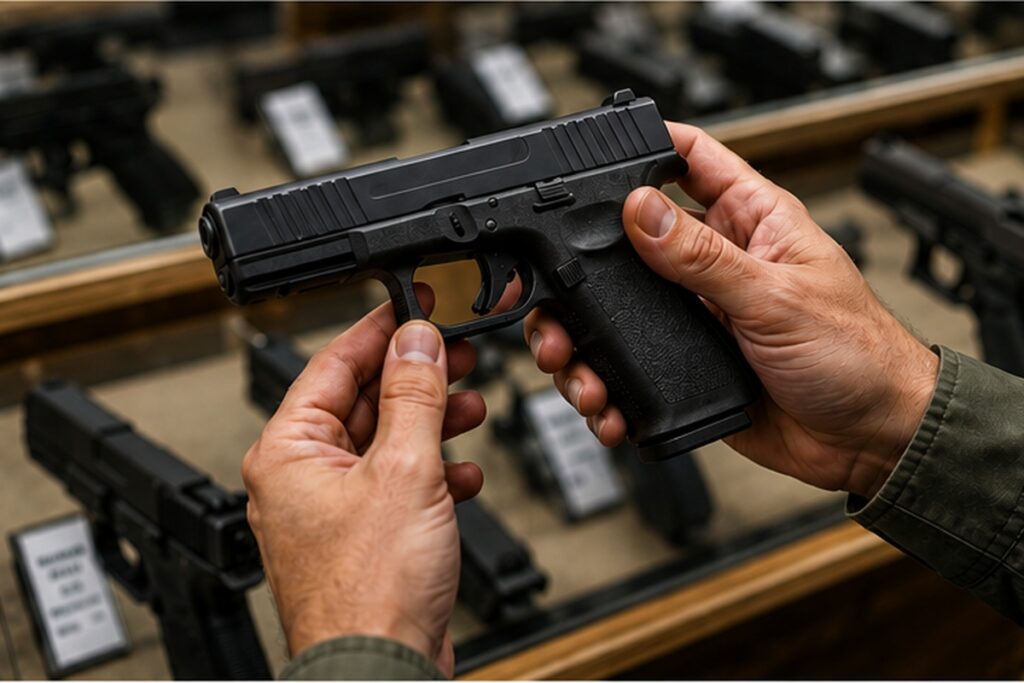
A handgun may look or feel good at the store but still be difficult to operate during live fire.
A proper fit should allow you to:
- Establish a secure grip
- Reach the controls
- Operate the slide or cylinder
- Load and unload safely
- Manage recoil
- Maintain control during repeated shots
Hand size alone does not determine fit. Strength, mobility, experience, and shooting technique also matter.
Smaller Does Not Always Mean Easier
Many new buyers assume a smaller handgun will be easier to use.
In practice, smaller firearms may have shorter grips, more noticeable recoil, reduced capacity, and controls that are harder to operate. A larger handgun may be easier to grip and more comfortable to shoot, although it may be less convenient to store or carry.
Every design involves tradeoffs.
Understanding those tradeoffs is more important than choosing a particular size category.
Caliber Is Only One Consideration
Caliber affects recoil, ammunition cost, firearm size, and the overall shooting experience.
However, caliber should not be selected based only on perceived power. A firearm is of limited value if the owner cannot control it, operate it reliably, or afford to practice regularly.
The right choice should support safe handling, consistent training, and the firearm’s intended purpose.
Consider the Complete Cost
The purchase price is only part of responsible firearm ownership.
Additional expenses may include:
- Ammunition
- Secure storage
- Eye and hearing protection
- Holsters or transportation cases
- Cleaning and maintenance supplies
- Range fees
- Professional training
A realistic budget should account for the equipment and practice needed to use the handgun responsibly.
Handle and Test Before Buying
Whenever possible, handle several options and test-fire the leading choices at a range.
A rental session can reveal factors that are difficult to judge at a sales counter, including recoil, comfort, control placement, and how quickly fatigue develops.
Avoid making a decision based entirely on online reviews or someone else’s preference. A handgun that works well for one person may not be appropriate for another.
Training Should Come Before Confidence
Purchasing a handgun does not automatically make someone prepared to use it.
New owners should understand safe handling, storage, loading and unloading, basic maintenance, and the legal responsibilities associated with firearm ownership.
Professional instruction can help identify problems that may not be obvious during the buying process and reduce the likelihood of purchasing a handgun that does not fit the shooter’s needs.
Make an Informed Decision
Your first handgun should support safe operation, regular practice, and responsible ownership.
Take time to compare options, understand the tradeoffs, and seek qualified guidance before making a purchase.
PRIDAN training helps new and prospective firearm owners evaluate fit, purpose, handling, and training needs before choosing a handgun.
Choose based on fit and function—not popularity.