
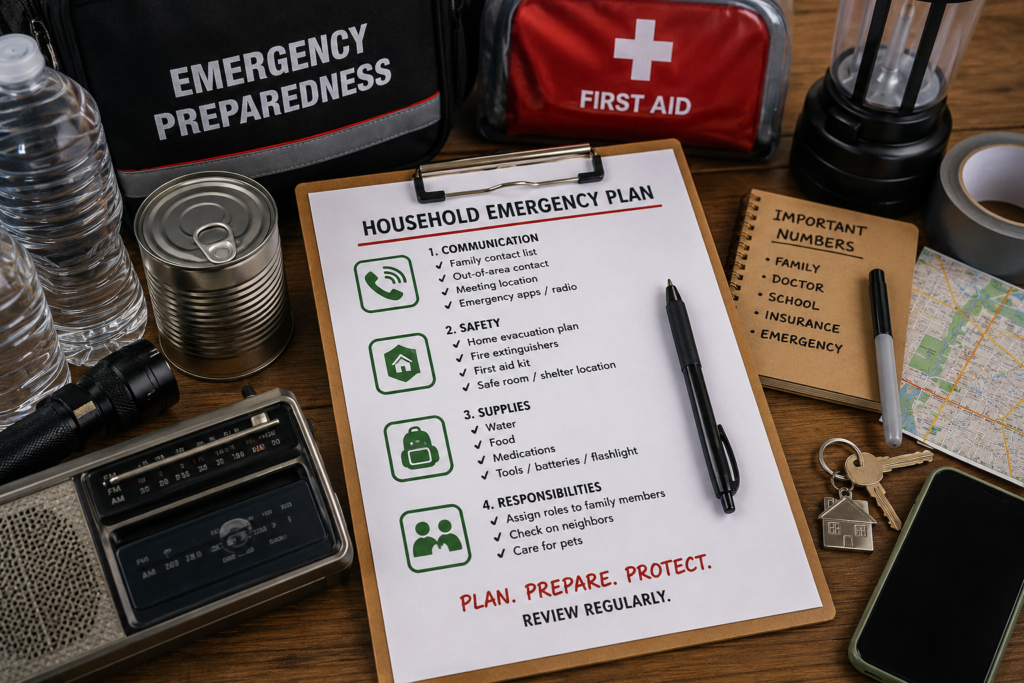
Emergency Preparedness Starts With a Plan
Emergency preparedness is often associated with buying supplies.
Water, food, flashlights, batteries, and first-aid equipment are important, but supplies alone do not make a household prepared. Preparation begins with understanding the emergencies you may face and deciding how your household will respond.
A simple plan can reduce confusion and help family members make better decisions when normal routines are disrupted.
Begin With Your Household
Every household has different needs.
Your plan should account for:
- Children and older adults
- Medical or mobility needs
- Pets
- Work and school schedules
- Transportation
- Household members who may be away when an emergency occurs
A plan copied from someone else may overlook the circumstances that matter most in your home.
Consider the Most Likely Disruptions
Preparedness does not require planning for every possible disaster.
Start by considering events that could realistically affect your household, such as:
- Power outages
- Severe weather
- Fires
- Temporary evacuations
- Medical emergencies
- Communication or transportation disruptions
Understanding the situation you are preparing for helps you make better decisions about supplies, communication, and responsibilities.
Decide How You Will Communicate
During an emergency, household members may be in different locations and normal communication may be limited.
Your family should know:
- How to contact one another
- Who to call if local communication is disrupted
- Where to meet if returning home is unsafe
- How children will be picked up or reunited with family
- Which information should be written down rather than stored only in a phone
The plan should be simple enough for everyone to understand and remember.
Know When to Stay and When to Leave
Some situations may require your household to remain at home. Others may require you to leave quickly.
These decisions should not be made for the first time during an emergency.
Consider how your household would respond if:
- You could not safely remain at home
- Roads or transportation were limited
- Family members were separated
- You had only a short time to leave
- You could not immediately return
The specific response will depend on the situation, but thinking through the possibilities in advance can reduce hesitation.
Build Supplies Around the Plan
Emergency supplies should support your household’s actual needs.
Rather than purchasing random equipment, consider what your family would need to communicate, remain safe, manage basic medical concerns, and function during a temporary disruption.
Supplies should also be:
- Accessible
- Organized
- Maintained
- Appropriate for the household
- Reviewed as family needs change
Owning equipment is not the same as knowing when or how to use it.
Assign Basic Responsibilities
A household plan works best when everyone understands their role.
Depending on age and ability, responsibilities may include gathering essential items, assisting children or pets, contacting relatives, checking emergency information, or preparing to leave.
Clear responsibilities can reduce duplication, confusion, and unnecessary delay.
Review the Plan Regularly
Preparedness is not a one-time activity.
Household schedules change. Children grow. Medications, contact information, vehicles, and living arrangements may also change.
Review your plan periodically and after any major household change. A plan that no longer reflects your circumstances may not be useful when needed.
Preparation Creates Better Options
You cannot predict every emergency, but you can prepare your household to respond with greater clarity.
The goal is not fear or perfection. It is to reduce confusion, identify priorities, and create a practical starting point before normal routines are interrupted.
PRIDAN training helps participants examine household needs, identify planning gaps, and begin developing a preparedness approach that fits their circumstances.
Prepare before the situation makes the decisions for you.